
See wellbeing clearly. Act sooner.
Psynary turns ongoing mental-health check-ins into a single, clear, organized view, so you can see what is changing and respond in time.
Every check-in, organized and ready before the session.
- Measurement-based care
- Ready before each session
- Privacy by design
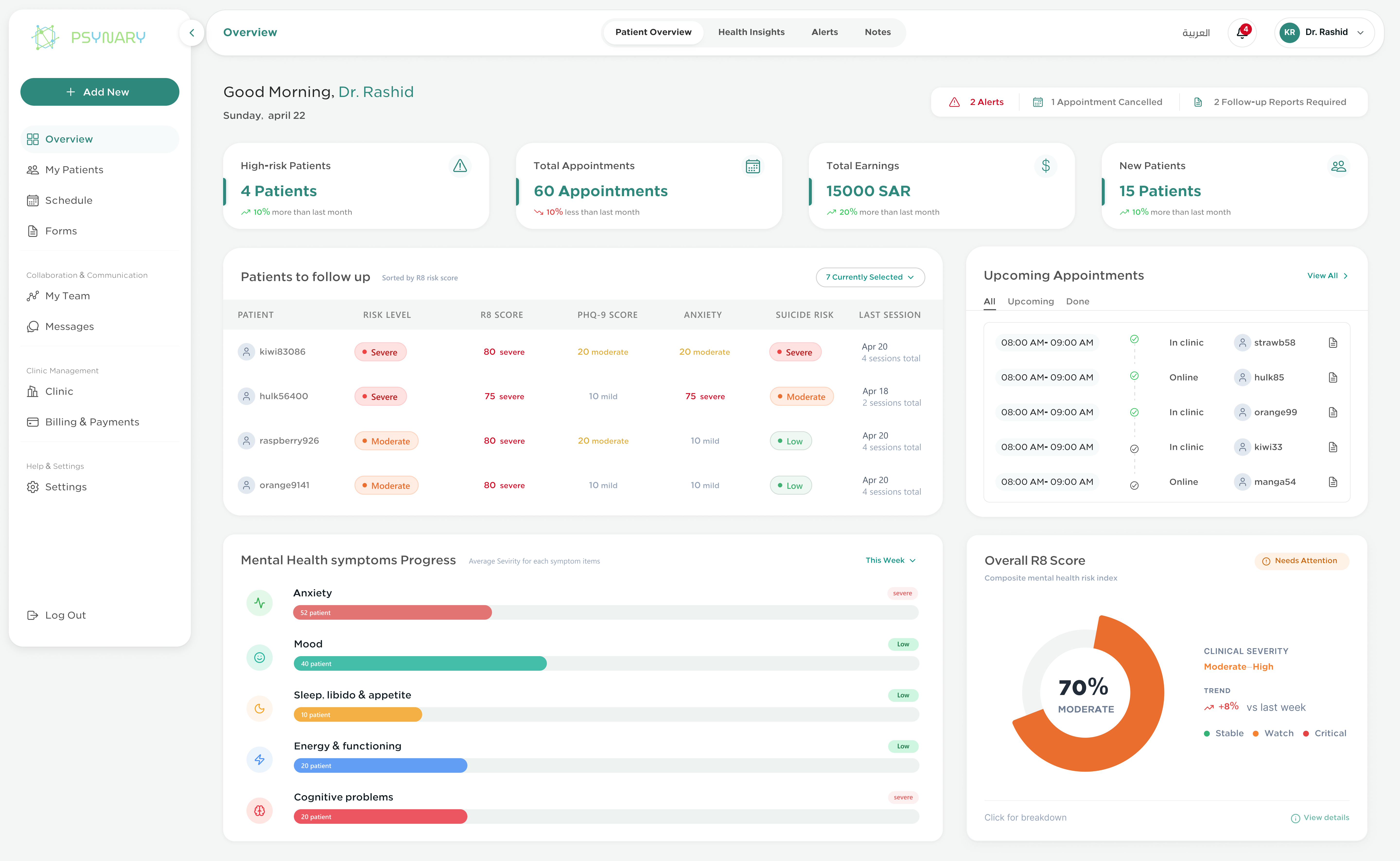
The gaps between sessions are the gaps in the data.
From scattered check-ins to a ready-for-session view.
Collect, structure, and surface client-reported check-ins — so each session starts with the context already organised in front of you.
collected through standardized, repeatable check-in forms
A prioritised caseload view
See your caseload sorted by who needs attention, so your time goes where it matters most.
Check-ins ready before each session
Structured check-ins are collected and organised ahead of time, so you walk in with the context already in front of you.
Trends over time, less admin
Self-reported responses are surfaced as simple trends and gathered automatically — less manual paperwork between sessions.
One system. Two views.
The clinician’s caseload view and the employer’s cohort view — built on the same calm system.
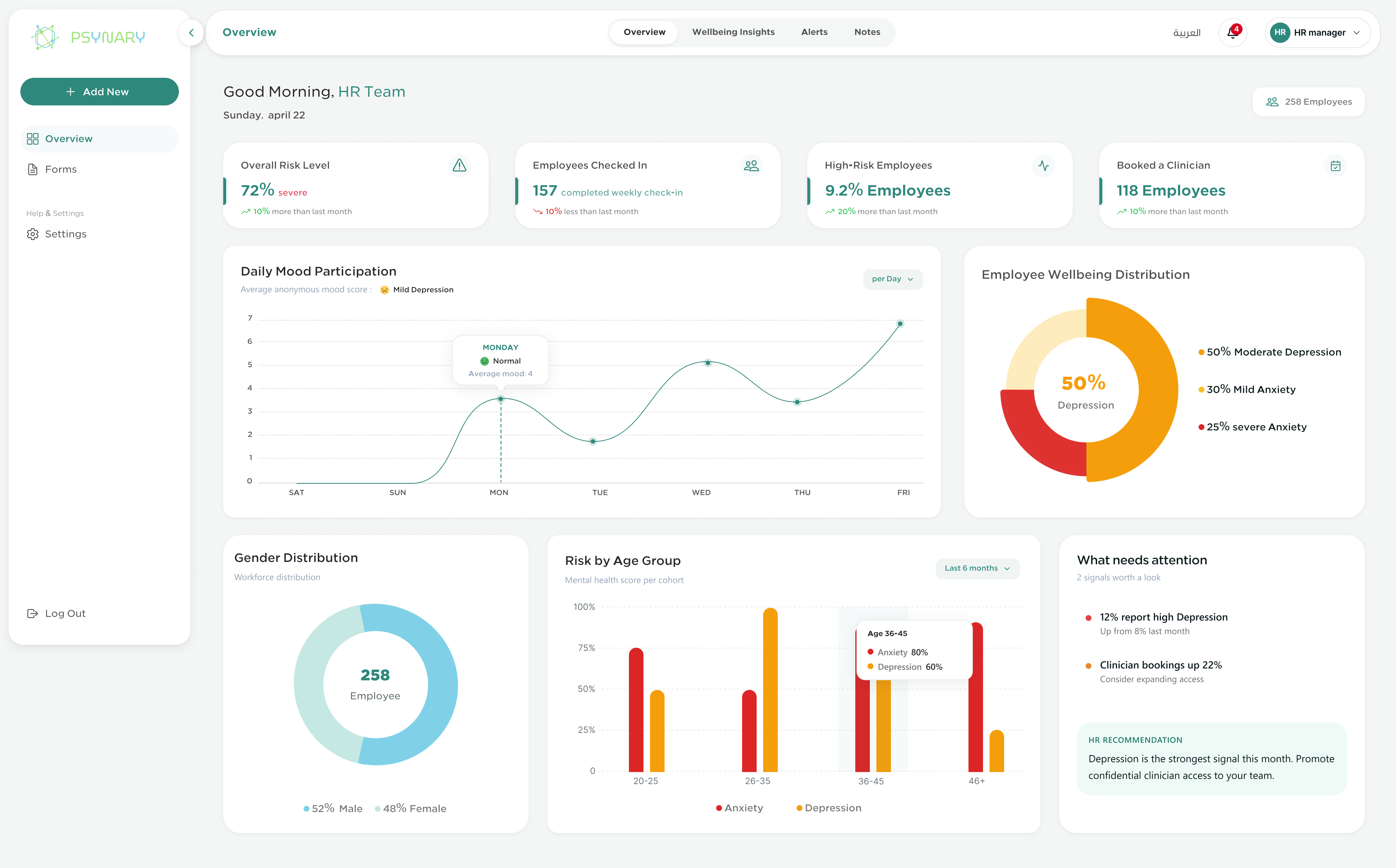
Evidence without exposure.
Published research, anonymized at scale, and grounded in an early-response window — so the clinician’s own review stays informed by structured data, not noise.
The early-response window
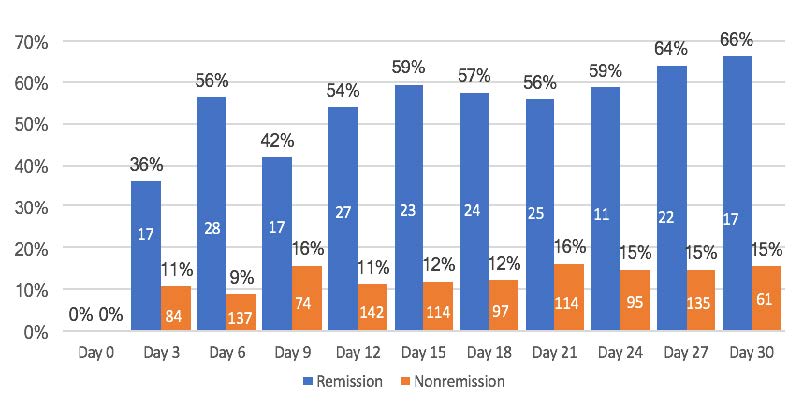
Illustrative timing from published mental-health research. Psynary did not produce this research and makes no clinical, diagnostic, or treatment-outcome claims. Full figures and citations: see the research.
Voices from the clinical floor.
Notes from clinicians using Psynary in early pilot programs — what changed in their workflow, what they trust more.
“I was delighted to be introduced to the Psynary platform. I found it very accessible and supporting two languages. The experience was easy to use, navigate, and accessible for both clinicians and patients. Each patient file is filled with informative data and displays charts of patient-reported outcomes, allowing for a comprehensive view of the patient's reported data within seconds. This saves time by eliminating the need to read a complete history record and progress updates. I look forward to having you in our department's academic activity day.”
“Finally, a tool that makes mental health care feel efficient — without losing the human side.”
“It gives me structured patient data before every session — exactly what my clinical judgment needs.”
- 98%Rated favorablyInternal pilot survey
- 2.3×Faster intakevs paper baseline
- 500+Clinicians in networkEarly provider program
One platform, seven places it earns its keep.
Patient-reported data collection across healthcare and research — built to support clinician-led care and research innovation.
Ready to see Psynary in action?
We’re onboarding clinics and employer wellbeing teams across Saudi Arabia. Book a walkthrough and see it on your own workflow.
- PDPL & GDPR ready
- Bilingual EN/AR
- No obligation